Burial Site Info
Birse Kirkyard
Birse, AberdeenshireAddress: Birse Kirkyard, Birse, Aboyne, Aberdeenshire, AB34 5BY
Site Type:
Kirkyard
Latitude: 57.064421
Longitude: -2.736703
Find A Grave Link: https://www.findagrave.com/cemetery/2361298/birse-kirkyard517 memorials
Description: TRANSCRIPT OF TALK by ANGUS FARQUHARSON
Birse Church 13 June 1987
The parishes of Birse & Finzean were together until 1902; Finzean then became a quod sacra parish and as from 1 June 1987 we are a united parish again. I’ve never spoken to a genealogical society before so I do it now with some trepidation, but I’ve always been interested in local history ever since I was at school at Glenalmond and found a complete set of 18th century Statistical Accounts for Scotland in the library. I read it avidly, particularly about my then home parish of Laurencekirk and surrounding district. I mention that because it has a bearing on what I want to say later really to illustrate two things: we live in a very small world, and we’re all “Jock Tamson’s bairns” and it’s perhaps not too astonishing that nearly all of us have links with one another that turn up in rather surprising ways.
I’ll speak a bit about my own family, into which I married, and which came first into the parish of Birse in 1579. As I said earlier, Finzean was a separate parish but all the Finzean people were buried here in Birse and that has been so since time immemorial. The first written record occurs probably in 1157 in a document signed by Pope Adrian IV confirming the rights of the Bishop of Aberdeen to some lands in Birse and there would have been a church, probably on this site, at that time.
A few years later in 1170 we read that King William the Lion augmented these lands by adding certain other properties in the parish, some of which are:- Drumichie, Kinminty, Balfour, Persie, Midstrath, Clune, Balnaboth, Ennichie, Balfiddie, Tillyfruskie & Tillygarmond. These names may not mean very much to you, but what is fascinating to me is that all of them are farms today and they existed over 800 years ago.
Later on, in 1511, the rent book of the famous Bishop Elphinstone shows many of the Birse & Finzean farms and, in the case of the Finzean farm called Belnaboth, you’ll see the name of Harper. I was interested to hear that there are two Harpers connections here today. They continued in that farm for hundreds of years before moving to the next door farm of Balnahard and relatives and connections of that family are still in the Finzean valley.
Another interesting name was Malcolm who traced their name back to Kinminty, which is not very far from here, where they went in the 11th century and they received a perpetual grant of land for having rescued Malcolm Canmore’s horse after it bolted in battle. The last Malcolm who lived in Finzean only died about 5 years ago and I think a sister is still living in the Stracathro area. In Finzean one of our own tenants, the Andersons of Upper Tillygarmont, has been there since the 18th century. Another family, the Thows of Ennachie who are still there, married a Burness daughter who was tenant of Ennachie. He had come over the Mearns at the beginning of the 19th century and was, I think, 1st cousin of Rabbie Burns. Many descendants of that family are still in Finzean.
The Mortimers of Clinter have been tenants of the Mill of Clinter for over 150 years. They came from another part of Birse where they were proprietors of Glencat, just above Ballogie, in 1636. Many of the families are inter-connected and, of course, that applies to the Farquharsons too. Another interesting family which might be mentioned here were the Lows of Easter Clune who obtained a lease from our family in 1764. The last Low died in Finzean about 15 years ago at Balnahard. They had inherited that through a Harper connection: his mother, I think, was a Harper. The farm is tenanted today by his nephew.
As I said before – it’s a small world! Only a few years ago my daughter met a cavalry officer at Cambridge University where they were studying. Though neither of then knew it, that boy had two Finzean grandparents, one being the late Sir Francis Low, editor of the Times of India, who was born in Easter Clune and married the daughter of the Finzean schoolmaster. I hope you will forgive me for talking about my family who, as I said, same to Finzean in 1579. It was to Tillygarmond actually, and they’re one of the older families which can be traced in the parish, but like any other family, they had a very chequered history but at least we are still here.
I’ve already spoken about Bishop Elphinstone who died in 1514, reportedly heartbroken after the Battle of Flodden which destroyed the flower of Scotland’s manhood. He was succeeded by a less worthy gentleman, one William Gordon, who was the son of the Marquis of Huntly. We’re told he embezzled the rents of the parish by feuing out lands, converting duties into money and wasting it on his illegitimate children & their mothers. No wonder he was the last Bishop before the Reformation!!
It was precisely at this time that the Farquharson Clan came into prominence. They are a branch of the McIntoshes, chiefs of the ancient Clan Chattan confederacy, an heiress of whom married a cadet of the Clan Macduff, who themselves claimed to be descended from the Pictish kings of Scotland. In Mediaeval times, the Macduffs considered themselves the premier clan of Scottish Guildry. Finlay Mhor Farquharson, who was reckoned to be the first Farquharson Clan Chief, died in 1547 fighting the English at the Battle of Pinkie while bearing the Royal Standard of Scotland in his hand. He married into a Banchory family, the Gardynes. Beatrix, who had a lovely singing voice, was a lady in waiting to Mary, Queen of Scots. It you go into the Royal Scottish Museum in Edinburgh, you will see a beautiful harp which belonged to her and is said to have been given her by Mary, Queen of Scots. Their son Donald was persuaded by his grandfather (the Gardyne who lived in Banchory) to move down the valley from the Castleton of Braemar where he lived, nearer to Banchory where his own seat was. The original letter, persuading him to do that, was in Finzean House until recently but unfortunately was burnt in the fire of 1954.
It was a shrewd time to move, as you will understand, because the Church lands were breaking up and the Gardynes already had an interest in two neighbouring farms at Finzean called Balfiddie & Tillyfruskie. The enormous repercussions of the Reformation rumbled on for centuries and the 17th was particularly unstable with religious strife and the invasion of Oliver Cromwell. During that time you can read about Donald Farquharson of Tillygarmond, who led the Clan in Montrose’s army, and was murdered by General Hurry’s men in Aberdeen and buried in the Laird of Drum’s Aisle in St.Nicholas Church. He was described as one of the noblest captains in all Montrose’s army and there is a very long eulogy about him in one of the Spalding Club books. I read it and we called our eldest son after him.
I believe many of the earlier Farquharsons must have been buried in Birse but this churchyard is built on top of a previous one and the first memorial stones are not that old. The oldest for our family is Archie Farquharson, the 8th Laird of Finzean who was quite a colourful character. He died about 1843. He succeeded to a very large estate, not just in Finzean, but he inherited Glendye and Blackhall which was all the land between Finzean and Banchory and he had Lumphanan Estate and Migvie as well, so it was a large area. He built a castle at Blackhall, he kept a racehorse there, he gambled, he drank and lived beyond his means. His wagers were absolutely notorious and he eventually became bankrupt, but fortunately, because Finzean was entailed property, the creditors couldn’t get their hands on it. Looking through the list of creditors the other day I found one of them was the famous Barclay of Ury who was the great ‘pedestrian’ that for a bet walked 1000 miles in 1000 hours. I was rather amused because my son Donald’s greatest friend at University was Charles Barclay who is the son of the present representative of that family. Fortunately neither Charles nor Donald are betting men and Charles didn’t press for an unclaimed debt of 150 years standing. It was fairly substantial, being 20,000 guineas, so with interest since about 1820 would be an horrific amount – an amusing link with the past.
The estate was later inherited by a branch of the Farquharsons of Balfour, who had come down a different line – they were Finzean Farquharsons originally. This was laid down strictly according to entail. A Dr. Francis Farquharson, physician in Edinburgh, inherited and he was a brother of Dr. Robert Farquharson, who was Liberal M.P. for West Aberdeenshire, and Joseph Farquharson the artist. Dr.Francis Farquharson married Alison Mary Ainslie, who was the daughter to a Writer to the Signet in Edinburgh, who was a close friend of Rabbie Burns, and the two of them went on a tour of the south of Scotland which is well documented. Robert & Joseph, the two sons, had yet another brother who was killed in an accident at Glenalmond School where today you can see a very beautiful stained glass window in the chapel to his memory. None of these brothers had any children. The estate was first inherited by Robert, then his brother Joseph, the artist, who died in 1935. My wife’s grandmother was a Farquharson, who was a cousin. She married the Rev. Marshall Lang, Moderator of the Church of Scotland and a son of the Principal of Aberdeen University, and through this connection my wife inherited the estate.
She had to drop her Lang surname and change it to Farquharson of Finzean according to the entail written in the 18th century. Also according to the entail, she had to bear the family coat of Arms, which are quite interesting, because they show the red lion rampant, which goes back to the connection with the old Clan Macduff – all the Clan Chattan septs have the red lion in them, I understand. There are also pine trees and the Scottish Saltire, which is the connection with Finlay Mhor dying bearing the Scottish standard. There is a knight in armour at one side as a supporter and on the other the wild cat of Clan Chattan. We moved into Finzean House in 1971 – ten years after my wife inherited the estate.
A little illustration of what I said about how everyone is connected and the world’s a small place. I made mention of Rabbie Burns, the connection with the Thow family, and with Alison Mary Ainslie, after whom my wife is called. This parish has yet another link with the poet which is interesting. There was a John Skinner, son of the schoolmaster in Birse, born in 1720; his mother was a Farquharson widow. He became a well known poet in his own right. He wrote “Tullochgorum” and “Ewie wi’ the crooked horn”, and he corresponded with Burns regularly. This John Skinner founded a long line of very distinguished Episcopalian Bishops, one of them ordained the first Bishop of the U.S.A., all done in secret because of the war with America just previously. The bi-centenary of that was celebrated in Aberdeen about 2 years ago. Now in Finzean we have a descendant called Donald Wilson whose home really is now in Finzean but he has just been appointed Governor of Hong Kong and it’s really rather remarkable to think that he can trace his name so far back.
If you don’t share my opinion that the world is a small place, I’ll weave one more web of my family history to prove it. I’ll go back to Glenalmond where my first spark of purely local history began. That school was founded by three people: the grandson of John Skinner, Primus of the Episcopal Church of Scotland, Dean Ramsay who was the nephew of the Laird, Archie Farquharson and William Gladstone the Prime Minister, whose family are still our neighbours at Glendye. In my history class there was another descendant of John Skinner, who is the same Governor of Hong Kong, and neither of us would have known of any Finzean connection or that there was in the chapel where we worshipped twice a day, seven days a week in those days, the memorial window of the Farquharson who was killed there. The common denominator of that little story is Finzean and the Farquharson family.
Many of you might know better stories because genealogy is interesting and can be great fun. In the graveyard you will see some well kent Finzean and Birse families – Littlejohns, Christies, Fergusons, Duncans, Dinnies and many more. There are Sivewrights too but I didn’t mention them because there aren’t any left in the parish now. An old rent book of 1890, with names of all the Farquharson tenants in Finzean and Lumphanan, which they had at that time, is a useful source.
A bit about the history of the church. The earliest record was 1157 and it belonged to the Bishop of Aberdeen and Birse was the seat of the Chancellor of the Diocese. The only relic of that old church is the ‘Crusader Stone’ in the vestry. We don’t know an awful lot about it but it’s probably dated about that time. This present building was put up in 1779 and there was a previous building a bit to the south, which was a stone building with a thatched roof and built in 1603 and replaced a yet earlier building on the same site. From 1618-1638 and 1660-1690 it was Episcopalian, like many others in the North-East of Scotland, and had a strong backing from the populace who followed the Marquis of Huntly during the Covenanting period and suffered because of it.
The whole of Birse was laid waste by the Earl of Argyll’s men. One of the ministers, who was also Laird of Easter Clune, was imprisoned for 9 months in Edinburgh and his home plundered. He was fined so heavily that the family, an old established Finzean family called Rose, never recovered. The first minister of this present building was George Knowles, who married a Farquharson of Balfour, which made him a relative of ours and he composed the psalm tune “Birse” or “Balfour” sometimes called “St.Stephen”. Previous to him was the remarkable Alexander Garden, who was minister for 51 years and died when he was 97. He was a great violinist and composed the old Scots fiddle tune “Jenny dang the weaver” after his wife who got the better of a local weaver in an argument. I think he was probably a relative of the Gardens of Midstrath who were descended from the Gardynes who first induced Donald Farquharson to come down from Braemar.
ANGUS FARQUHARSON
Birse Church
13 June 1987
Inscription Status
Maps
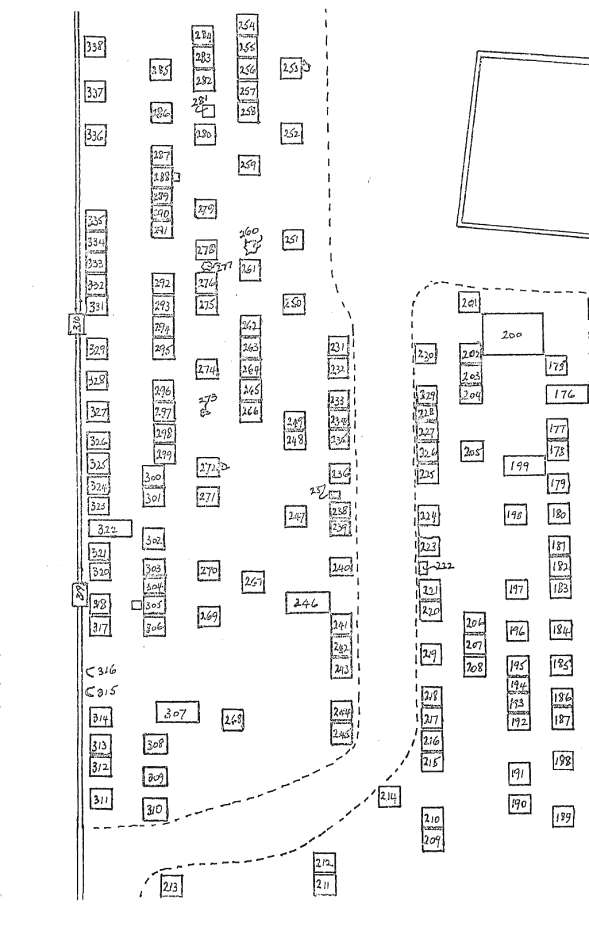
Birse Kirkyard 1
1 of 2Publications
| Code | Title |
|---|---|
| AA104 | The Kirkyard of Birse |