Publication Info
Publication Details
Introduction
Kinneff Church The original church on this site was dedicated to St. Antony in 1242. The present church , built essentially on the foundations of the original, incorporates some of the original to just below sill level. In medieval times there was a nave and small chancel area – there are still traces of the Priest’s door and People’s door, and harling or roughcast was standard on Scottish kirks. The classical Belfry dates from 1738 when the present church was built, it was raised in height and made more spacious. In the Reformation the altar was removed and the pulpit placed in the middle of the long wall with a loft at either end - windows were possibly added at this time. The old church at Glenbuchat is one of the few untouched Post Reformation churches with the pulpit and table the dominant features. The church was enlarged again in 1876 and made T-shaped to give better hearing but little has been done since then. The Free Kirk was built on the main road and the parish gradually transferred to Roadside of Kinneff. By 1970 the kirk was no longer in use. Today it is in the trusteeship of a Limited Company who are restoring it and the memorials inside the church which are to George Ogilvy, the governor of Dunnottar Castle during the Reformation, the Graingers and the Honeymans. The West wall of the present building is said to be the only remaining part which Mr Grainger would have known. “So who’s Mr Grainger” I hear you ask. Rev. James Grainger and his wife Christian played a notable part in Scottish history. In the 17th century Oliver Cromwell was running amok all over the country and for safe keeping the Honours of Scotland – the Scots Regalia was placed at Dunnottar Castle, a few miles to the north of Kinneff. The Castle sits on rocks and is well nigh impregnable so the invaders decided to starve them into surrender. Before that could happen Mrs Grainger, with her maid, went to see her friend Mrs Oglivy, the governor’s wife. She came away with the Crown under her skirts and the Sceptre and Sword of State wrapped to resemble a distaff carried by the maid. They laid these treasures under their bed for a while then for safety and security the laid them under the pulpit in the church where they lay undisturbed until the Restoration and were handed to Charles II. The Honeymans were Mr Grainger’s successors and are remarkable in the Scots Kirk because Rev. James Honeyman, a brother of the Episcopal Bishop of Orkney, was himself succeeded by his son, then his grandson, then his great-grandson covering in total 118 years. Based on a talk by Mr Norman Marr to the Society at the Kirkyard and “The Queen’s Scotland” the Eastern Counties, by Nigel Tranter.
Acknowledgements
Thanks go to Margaret Brown for her initial work with me to prepare for the society outing. Those members of the society who were with us on that day must have forgotten all about it by now, it was such a long time ago. We have been back a few times to try deciphering a bit more on some of the flat stones. Our thanks also to Betty Taylor & Helen Duncan who have assisted with the final check for us recently and for finishing off in Catterline, St. Catherine’s. They also did the plan of St. Philip’s Episcopal for me. To Edna Cromarty for proof reading, checking those inevitable irritating niggly bits and the updated index. To Gavin Bell for supplying images of the 3 burial grounds, for the location plan, for translating the Latin inscriptions at St Catherine’s and Philip’s and preparing the whole for the press. I would point out that only the oldest part of Kinneff Kirkyard has been transcribed. When we first visited, the newer part was only just starting to be used but eventually that will also be included.
Comments
Catterline Old Kirkyard, naming 222 individuals between 1631 and 1985 Catterline Episcopal New Kirkyard (parish of Kinneff and Catterline), naming 77 individuals between 1851 and 1976 Kinneff Old Kirkyard, naming 377 individuals between 1648 and 1969
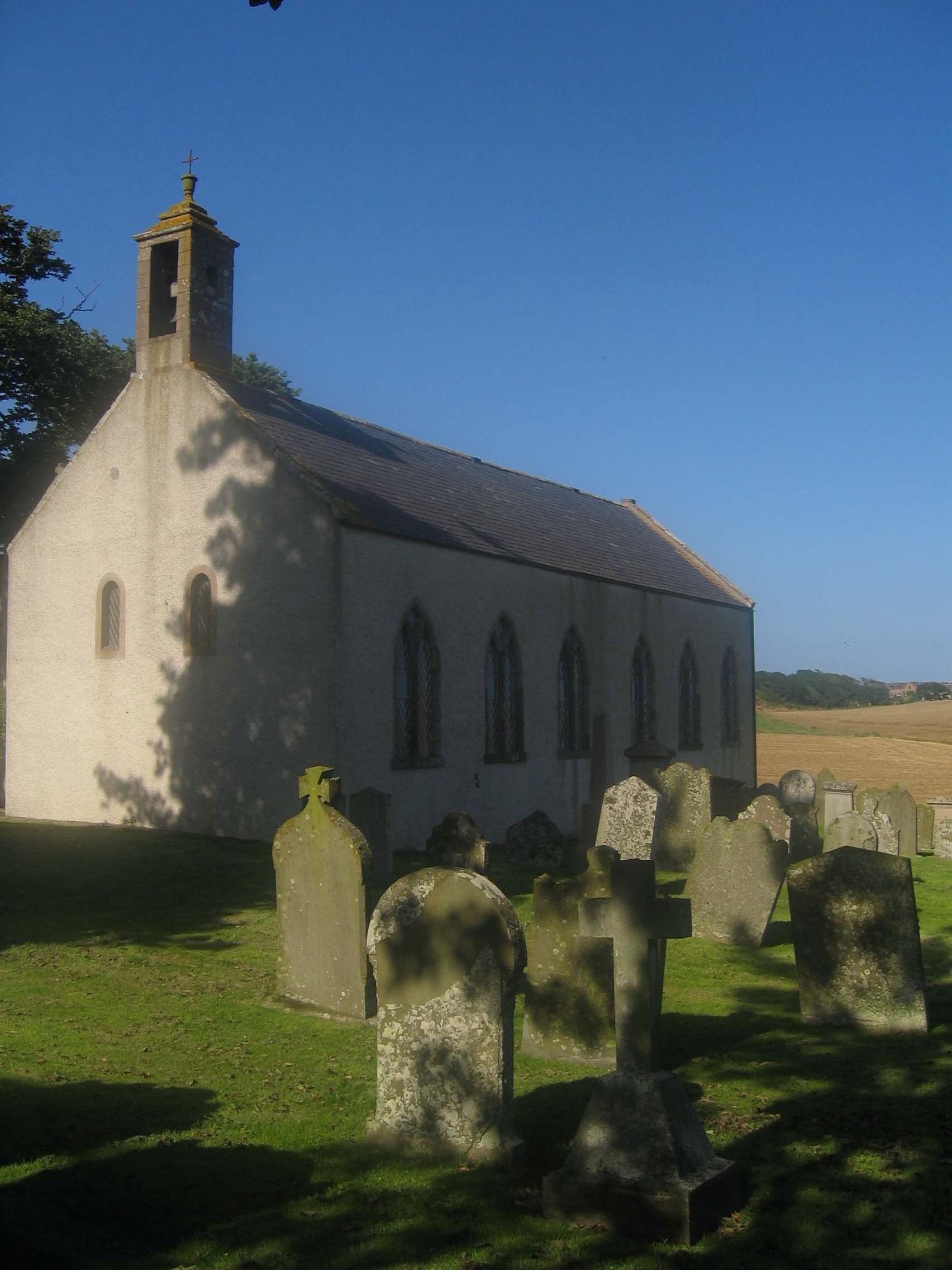
Cover Photograph by Gavin Bell