Publication Info
Publication Details
Introduction
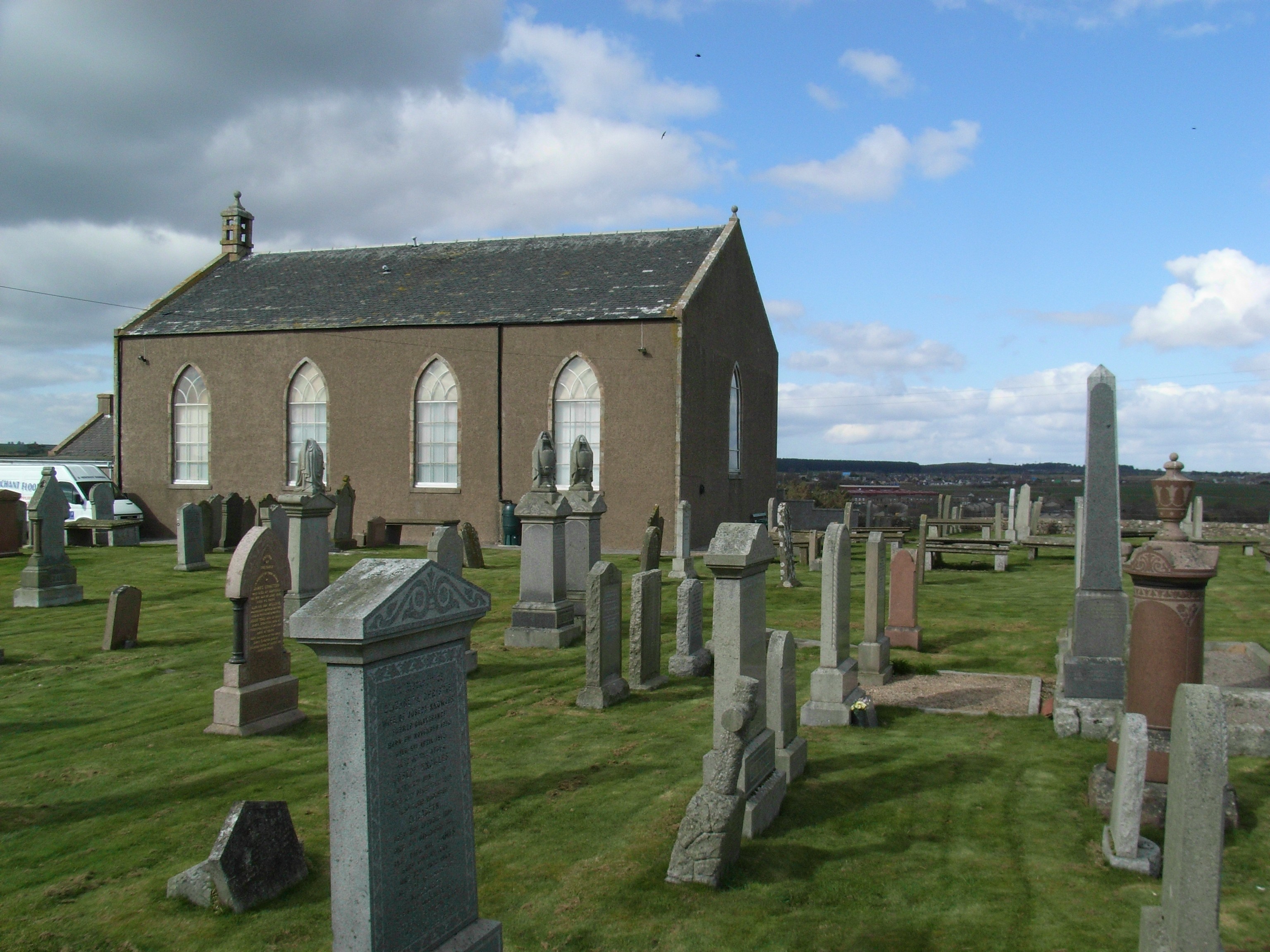
The site of the church at Portlethen is an ancient one, but its history since the Reformation was a chequered one. After a period of some neglect, the church became, towards the end of the 18th century, a “chapel of ease” to the Kirk of Banchory-Devenick, achieving formal quoad sacra status in 1856. The church itself was refashioned in the 1830s. Burials seem to have started on the site early in the 19th century, initially in the slightly raised area to the east and south of the church. Two separate phases of extension can be identified, one immediately to the south of this oldest part dating to the later 19th century, with a second, lying west of the first two parts, being laid out in the mid-20th century. Towards the close of the 20th century, a new cemetery area (still in use) was opened to the south, divided from the earlier parts by a wall. This booklet covers some 350 stones in the older kirkyard area north of the wall, where very few burials now take place. Portlethen Kirkyard has been surveyed before. In volume 2 of his “Epitaphs and Inscriptions” A. Jervise gives transcriptions of about half a dozen stones, selected, it would appear, for their “quaintness”. A more serious survey was carried out some years ago by members of the Scottish Genealogy Society, and published in their volume of “Pre-1855 Gravestone Inscriptions in Kincardineshire.” This gives versions of some 38 inscriptions which include deaths before the start of Civil Registration. Portlethen was chosen as the venue for the ANESFHS annual “graveyard picnic” in June 2008, and a mixed party of ANESFHS members and Portlethen parishioners (around 40 in total) descended on the kirkyard, and produced readings of all 350 stones. The day was dry and started reasonably pleasant, but conditions became less than ideal as the ‘haar’ drifted in off the sea. Following this initial visit, a smaller group of local members helped with resolving disputed readings, and occasional sunny days in the weeks following the “picnic” also made it possible to read those stones (mostly early 19th century table stones) which needed strong light. All of the stones described by Jervise can still be identified, and all but one of the 38 stones included in the SGS volume (the odd one out is now lying face-down). However, we take issue with some of the SGS readings. Most frequently we differ in the interpretation of numerals on some of the oldest stones – this is always going to be a matter of judgement - but we differ also on occasion regarding the spellings of personal names or place names. We have also in some cases been able to decipher details which the SGS volume omits. My thanks go to all who helped with reading the stones, and also to two non-local members who produced the Index and proofread the MIs. That said, any remaining errors must be laid at my door. Gavin Bell