Publication Info
Publication Details
Introduction
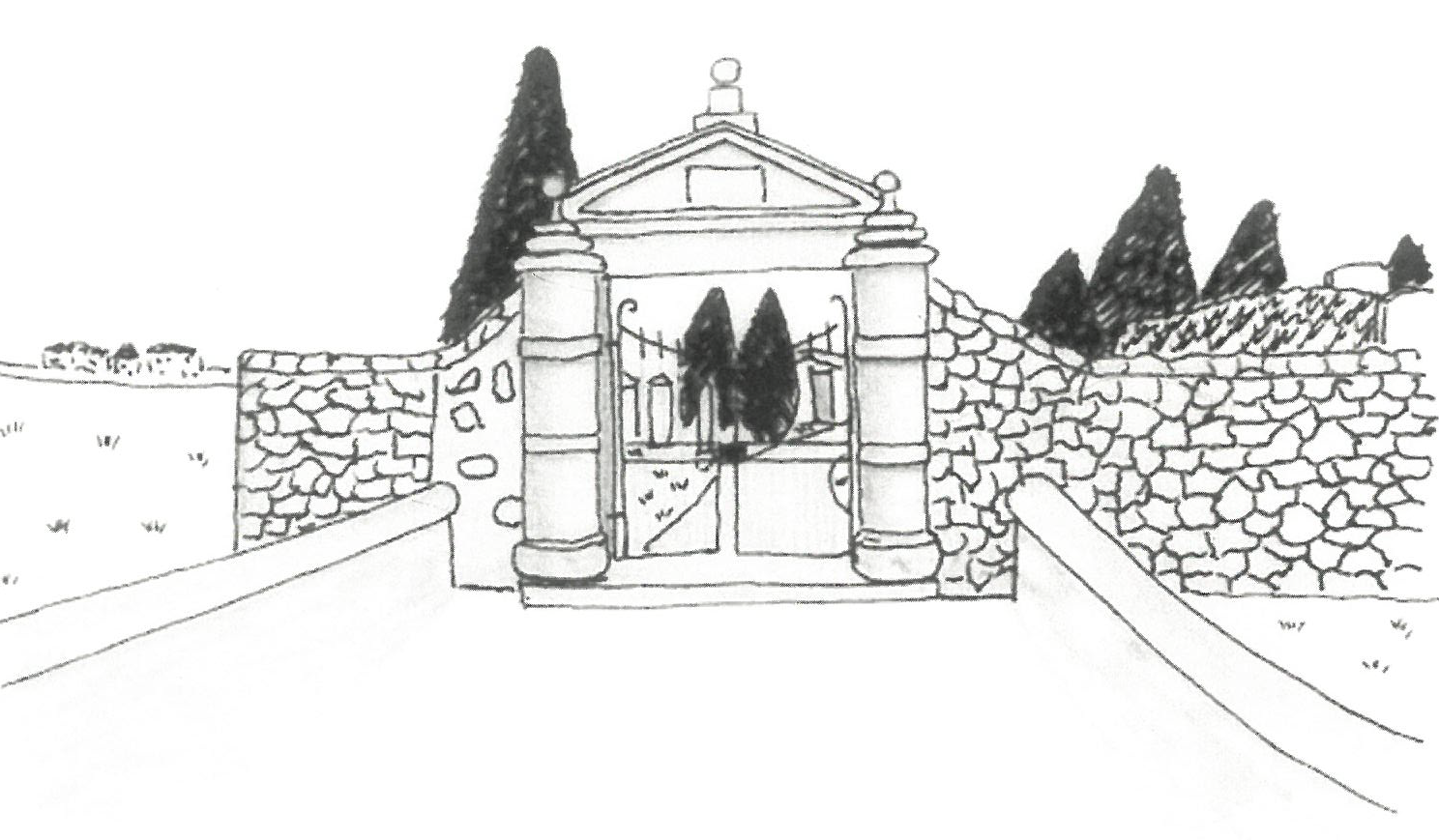
Fetterangus was originally a detatched part of Banffshire until it was included in Aberdeenshire in 1890. In early days it belonged to the family of LE NEYM and then to the CHRYNES of Inverugie who were the hereditary Sheriffs of Banff. The parish chapel, which measured 33ft by 12ft, was dedicated to St.Fergus and the old font, which still lies within the ruins, is said to never be dry. Certainly in all my visits over the past 33 years it has never been so. The sculptured stone which now stands at the right hand entrance is of Whinstone and was discovered in 1876. A considerable number of stones are now below the surface of the churchyard, including some I remember from my boyhood which were half circle and half octagonal with inscriptions round the top. Time and lack of manpower has meant that these remain ‘neath the soil. James Shirer Extract from ‘Aberdeen Daily Free Press’ 31 July 1877. In these days when the spread of general intelligence is causing more attention to be paid to interesting localities and the preservation of objects of antiquarian interest, it is gratifying to find that in such a rural locality as that of Fetterangus a movement such as we have today to record should have taken place. The old burial ground in that old and now almost forgotten parish had been allowed to fall into a sad state of neglect; its interesting old stones, of which it contains not a few curious examples, were becoming buried our of sight or broken beyond all power of recognition and the wall that of old surrounded it so tumbled down as to be no protection to it. The case was taken up a few months ago by some of the villagers, and a movement set agoing for getting the place put into a more decent state of keeping. A committee was formed and so heartily was the movement supported that the sum of upwards of £80 was soon raised from 300 subscribers, besides work in the shape of cartages and preparation of stones by local parties. The work so auspiciously begun arrives at an interesting stage on Saturday evening last, when at a gathering of the committee and local subscribers the foundation stone of the substantial new wall was laid. Mr. Milne, the treasurer of the committee, read a report of what had been done and sketched out what it was hoped they might yet be able to do for the old place; a concrete block which had been prepared to hold a minute of the doings of the committee, a list of the subscribers, the local papers of the day, a book of fashions of the period and other interesting mementoes, was put in place by Mr Taylor, land officer at Pitfour, the Masonic part being duly performed by a lady. After which Mr. Gibb, F.S.A.Scot., who happened to be present was called on and gave the following address:- “The ceremony you have now been engaged in is a very interesting one indeed. Respect for memory of the dead is highly characteristic of the human family and of them alone. Its propriety and antiquity are early attested by the sacred Scriptures, but being common to the race, it is seen also in the works of all other nations besides that of the Jews. The spot on which we stand is a very ancient site of a religious edifice – it is impossible to say how old. We know that the Christianisation of this part of Scotland is due to St. Columba and his pupil St. Drostan, who came to this country in the year 563. St. Columba established a Culdee mission station at Deer, and left St. Drostan in charge of it. This establishment continued under many vicissitudes till the year 1219, when William Cumine, Earl of Buchan, founded a monastery of monks brought from Kinloss. From this time the Abbey of Deer passes into the domain of ancient history. In all probability, however, this particular locality owes its conversion to St. Fergus, a missionary who came to Scotland from Ireland 200 years after St. Columba. He established a cell or house of prayer near the seashore not far from Peterhead. He was a very devoted servant of God, and held in high esteem. Miracles are said to have been wrought by his relics, up even to the period of the Reformation. In all probability, the church of Fetterangus was a cell frequented by St. Fergus, or a place where his relics were kept. We find few notices of it in history till 1207, when it was granted to the monks of Arbroath by Bishop Adam of Aberdeen. At this time almost all the small parochial livings over the country were being absorbed by the great Abbeys and Cathedrals, which were springing up all over the land. This grant was confirmed by King William the Lion in 1213 and again by Pope Honorius III in 1220. The chapel comes to notice again in 1525, when its income was leased 19 years to Gilbert Keith of Troup and his wife. From this time onward it gradually became suppressed as a place of regular worship and though still affiliated to its parent parish of St. Fergus, in the county of Banff, has become in reality to be looked upon as a part of the parish of Deer. But I think we can put in a claim for a higher antiquity, as a place of note, to this part of Fetterangus than any of those dates we have noted, older than the Christianisation of the country, or even of the invasion of the Romans. As you are aware, there is spread over the country a class of monuments called standing stones. The age of these monuments is unknown, and whatever it may be, it is well understood to be before the inroad of the Romans or the influence of Christianity. These monuments may be divided into two classes. The rude, shapeless, unsculptured stones that stand singly or in circles over the country, and are known as Druid stones or temples, although it is doubtful however, whether Druids were ever located in this country at all. The other class of stones are those which are found in more select localities and which bear on their faces those strange sculptured figures which have so long puzzled the learned to explain. The wooded hills around us contain several good examples of the former class of stones, and about twelvemonth ago, a specimen of the latter, or sculptured class, was turned up in this old burial ground, showing that this place had been a revered site at a very early age indeed. We have authentic history to show that in early times, and even down to the period of the Reformation, the courts of the nobles, bishops and the sheriffs of the counties were held at the Stones, or on the sites of the Druid Temples. And we also know that the early missionaries of the Cross fixed on the sites held in reverence by the pagan population, as places where they erected their first houses of prayer. Hence the frequency with which we find fragments of the sculptured stones near the very oldest places of worship. I need not detain you explaining particularly the curious figures which are cut on these sculptured stones, and the legends sometimes associated with them, nor to explain how it comes that sometimes the Christian symbols are found on the same monument with those of undoubted heathen or pagan origin. I will only say that these figures and symbols are generally understood now by those who have devoted attention to the matter, to be a sort of rude heraldry – symbolical in some way or other of the rank, power or doings of the person they were erected to commemorate. A good deal of interest has been excited in some quarters by the fact of such a fragment having been discovered at Fetterangus. I cannot close these remarks without alluding to an individual who took a special interest in this – the late Dr. John Stuart, Secretary of the Society of Antiquaries of Scotland, and author of the well-known work, ”The Sculptured Stones of Scotland.“ He passed in the midst of his labours from this world to a better, or I have no doubt he would have paid this locality a visit, and given you some assistance in your present meritorious work. He was also the editor of that interesting ”Book of Deer“, which was discovered in one of the public libraries of England some years ago. The ”Book of Deer“ consists of a part of the four gospels – written on velum in Latin. It was the copy used in the old Abbey of Deer and dates from the 9th century. It contains also a burial service and some charters of grant of land to the abbots of Deer. In contains some illuminations, and is very small, having had to be carried about by the officiating missionary in his visitations among the people. In conclusion, I may say that the work you have been engaged in is very meritorious and highly characteristic of the Scottish people’s intelligent respect for the memory of the dead and the preservation of the antiquities of their native land.” After a vote of thanks to the various parties who had shown their interest in the work by their valuable assistance, the meeting separated, highly gratified with what has so far been done to put the old place into seemly order. We think that some other localities might not do much amiss in following the example of the good people of Fetterangus.
Acknowledgements
Our sincere thanks to Mr. Shirer, who we all know as Jim now he is part of the ‘Graveyard Gang’. He started this long before he was involved with us, but we helped him in the later stages. Jean Cowper (now Mrs. Jim Shirer) gave him a hand to finish the reading and lent a foot when they dug up some of the ones under the soil. These are marked on the plan with a dotted line. Margaret Brown helped him with the checking and I did the plan so although it started as a single handed job, it finished a joint effort. Nevertheless, we are grateful to Jim for starting it off, as this is one we may not have got to for some time yet. Sheila M.Spiers
Comments
Fetterangus Old Kirkyard (parish of Old Deer), naming 895 individuals between 1681 and 1985